Việt Namese economy is witnessing high growth, says professor
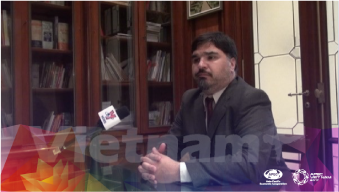
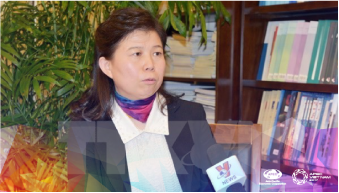
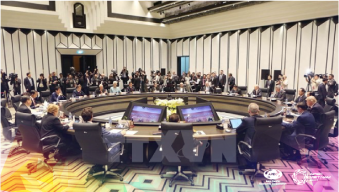
As part of the APEC 2017’s summit week in Đà Nẵng City of Việt Nam, Vietnam News Agency interviewed Professor Shang Feng from Beijing’s University of International Business and Economics.
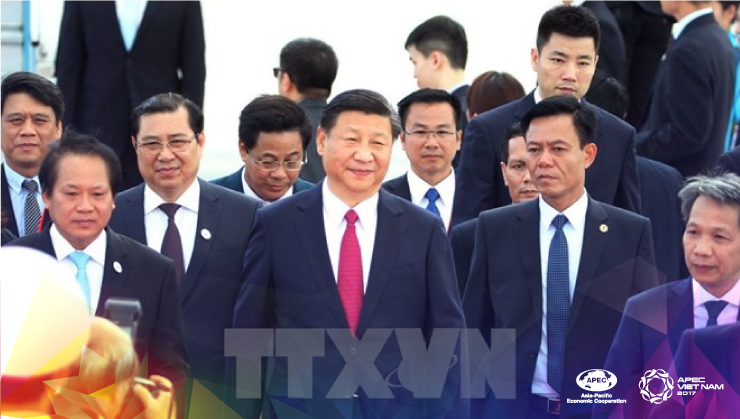
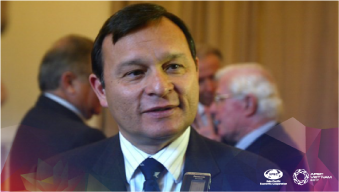
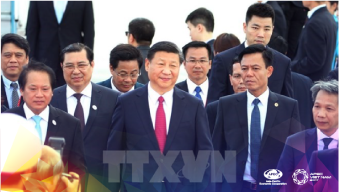
Deputy Minister of Ministry of Information and Communications Truong Minh Tuan received guests at Da Nang International Airport on November 10 2017. (Source: TTXVN)
According to Feng, the official State-level visit by China’s Party Secretary and President Xi Jinping to Việt Nam, as well as his participation in the APEC summit week has significant meaning, as 2017 is an important year in the history of the Việt Nam-China relationship.
Previously, in January and May, Việt Nam’s Communist Party Secretary, Nguyễn Phú Trọng, and State President, Trần Đại Quang, have visited China, during which trips the two countries signed numerous co-operation pacts, helping to elevate ties to new historical heights.
In addition, the visit to Việt Nam is the first foreign trip conducted by Xi Jinping after China’s 19th National Congress of the Communist Party, marking a meaningful milestone in consolidating the traditional relationship between the two countries.
In terms of economic ties, two-way trade between China and Việt Nam reached US$98.2 billion in 2016, and the figure is expected to rise past the USD100 billion milestone in this year. With the promotion of China’s Belt and Road initiative, bilateral investment and trade will surely see a considerable boost in the time to come, as the two sides will step up co-operation in traffic, energy, science and technology, production capacity and environmental works, Feng said.
Regarding APEC 2017, Feng said China continued to promote trade and investment liberalisation mechanisms and protest against protectionism, as per APEC’s “traditional stance.” China also called for more intensive connectivity between the bloc’s member economies. The country also expressed its interests in non-traditional security threats such as climate change, energy security, terrorism, and postulated shared prosperity amongst the Asia-Pacific economies.
Professor Feng considered Việt Nam to be in an advantageous position. After 30 years of reforms, the Việt Namese economy has been witnessing fast growth, with the main economic sectors recording relatively strong development, forming a basis for further development. The country’s labour force is plenty and the demographic is affordable and young.
In addition, Việt Nam’s business environment is improving everyday, attracting more and more foreign investment. However, he said that the country is also facing a lot of issues, such as low- quality infrastructure that may not be able to catch up with the demands of the globalization era, serious shortage of skilled workers and that economic reforms have not been implemented strongly enough.