“Asia-Pacific will continue to be global economic hub”
During the 2017 Asia-Pacific Economic Cooperation (APEC) Summit in Đà Nẵng City, the Khmer Times posted an article titled "Việt Nam hosts APEC summit amid challenges" on November 6.
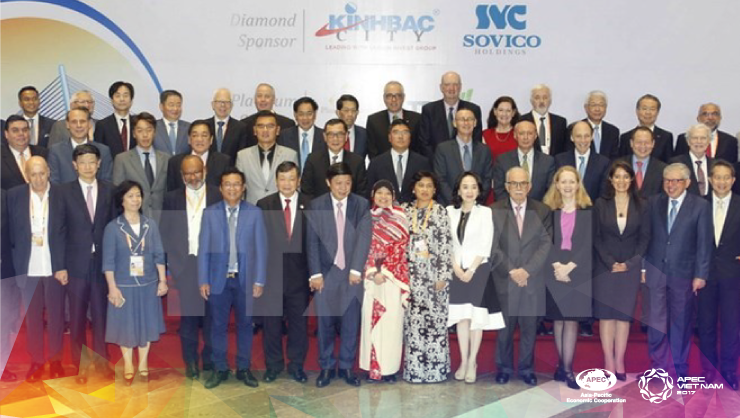
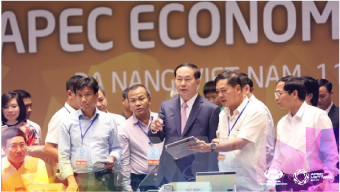
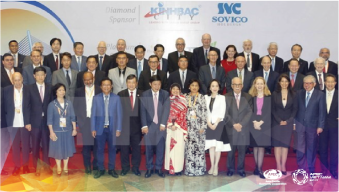
Leaders and delegates attended to APEC Business Advisory Council (ABAC) meeting (Source: TTXVN)
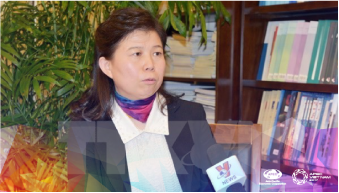
The Khmer Times is one of the two major English dailies in Cambodia. The article was written by Chheang Vannarith, Cambodian expert on Southeast Asian issues, currently based in Singapore and Cambodia.
The author argues that Việt Nam hosted the 2017 APEC summit in the midst of a tense world economic order; while the global economy has recovered, the growth rate is still lower than before the 2008 economic crisis due to rising inequality, coupled with global warming, climate change, protectionism, political issues, and so on.
Regardless, APEC economies are still developing in sync with an equally rapidly growing regional economic integration.
The world, Asia Pacific region and individual countries are all in need of investment to promote governance reform for a comprehensive and sustainably developing society. Thus, initiatives in the public sector are critical to improving state performance and adapting to emerging challenges.
According to the author, APEC is currently the largest economic cooperation mechanism in the region, accounting for 59 per cent of global GDP, 48 per cent of global trade and 53 per cent of global FDI.
Việt Nam, an APEC member since 1998 and host country of the 2017 APEC summit, has signed free trade agreements with 18 other member economies, and considers the United States, China, Japan and South Korea, as well as Hong Kong, Malaysia and Singapore as main export markets.
With that in mind, the author quoted President, Trần Đại Quang, saying that "after more than 30 years of in-depth regional and international reform and integration, Việt Nam is now an open and dynamic economy, with the prospect of becoming one of the 10 fastest growing economies in the world."
Assessing the concerns of the economies participating in the 2017 APEC Summit, the author said that with the policy "America above all," the United States will put more pressure on other economies so that they would consider having a better attitude towards the United States in terms of trade and investment.
In addition, the United States is also interested in expanding cooperation in the fields of digital economy, services liberalization and women’s involvement in economic development.
Regarding Japan, the author commented that the country is very interested in developing a common strategy and action plan for the region to liberalize trade and investment. Therefore, maintaining an open and free mechanism is one of the core interests of Japan's foreign policy. For China, the author asserted that it is ready to take the lead in promoting a free-trade economic order by promoting an open, multilateral economic system and facilitating trade and investment.
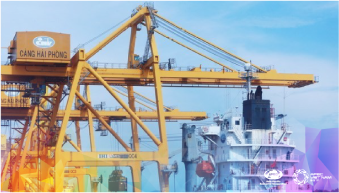
China is interested in linking the Belt and Road Initiative (BRI) with other regional mechanisms such as APEC. The country is also interested in setting up a cooperation framework to facilitate cross-border e-commerce, such as the Asia-Pacific Model of E-port Network, to improve the exchange of information between ports.
Commenting on the upcoming challenges of APEC, the author said that it is mostly related to the issues on how to promote open and inclusive regional and global economic development, ensure open and fair regional trade arrangements, overcome the challenges posed by climate change and the fourth industrial revolution and link trade with the realization of the United Nations’ sustainable development goals.
The author also quoted Deputy Prime Minister, Phạm Bình Minh, at the General meeting of the Pacific Economic Cooperation Council in May this year that "in the context of global instability, more than ever do we need a transparent, open, constructive and responsive regional architecture,” and that "we need innovative forms of trade and management cooperation, cohesion and resolution for solving next generation investment and trade issues, building capacity and for economic and technical cooperation. "
At the end of the article, the author predicts, with the theme of "Creating New Dynamism, Fostering A Shared Future" and priority areas for promoting APEC cooperation, including promoting sustainable growth, deepening regional economic links, increasing micro, small and medium enterprises’ competitiveness and creativity, enhancing food security and developing sustainable agriculture in the near future, the global economic center will still be located in the Asia-Pacific region.