Devine praises Việt Nam, Canada bilateral relations growth
On November 8 and 9, Prime Minister Justin Trudeau paid an official visit to Việt Nam before attending the 2017 Asia Pacific Economic Cooperation (APEC) Summit.

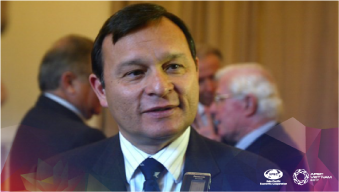
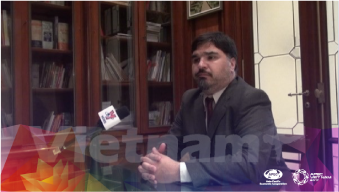
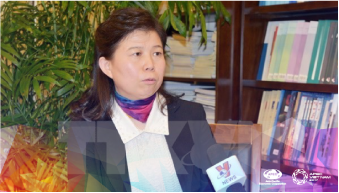
Former Canadian Ambassador to Việt Nam, David Devine. – VNA/VNS Photo Thúy Hà
Commenting on Trudeau’s visit, former Canadian Ambassador to Việt Nam, David Devine, said that this would be an important milestone for bilateral relations and a stable bilateral relationship towards the two countries’ 45th anniversary of established diplomatic relations next year.
Devine said that in recent years, bilateral relations have grown steadily, especially in the areas of trade, investment and education.
In the field of education, the number of Vietnamese students coming to Canada between 2015 and 2016 has increased by 30 per cent, year on year. Each year, there are about 7,500 Vietnamese students studying in Canada thanks to the country’s quality education, reasonable expenses, safe environment, simple visa procedures and more than 10,000 fields of study to choose from. According to a recent survey, Canada is the third favorite destination for Vietnamese students.
Besides the field of education, trade cooperation is also a highlight in the two countries’ bilateral relationship. By 2015, Việt Nam had risen to become Canada's largest trading partner in ASEAN, with two-way trade reaching CAD5.5 billion last year, and still growing. Canada also has a large number of companies doing business in Việt Nam in fields ranging from agriculture and fertilizers to insurance and aviation.
Meanwhile, Canada's development assistance projects have also helped Việt Nam to accelerate poverty reduction and contribute to the improvement of economic conditions. Canada has implemented a number of food safety and hygiene projects, supported the cooperative model in Việt Nam and strengthened the financial capacity of small businesses to help improve productivity and ensure safety. These are important elements for Việt Nam's economy, which depends heavily on agriculture.
In addition, Canada has also assisted Việt Nam in coordinating with international programmes and organisations such as the United Nations Development Program (UNDP), the World Bank (WB) and others, to help expand Việt Nam’s development opportunities. Devine said all of this has brought the two countries closer to substantive development and allowed the two sides to cooperate effectively.
On the prospect of expanding bilateral cooperation in the time to come, Devine said that besides continuing to promote agricultural and educational cooperation, Canada and Việt Nam could consider promoting high-tech cooperation, to help create added value for the Vietnamese economy. Initially, Vietnamese enterprises will be aided to improve their production capacity of components for modern technology products rather than just focus on assembling products from imported components as they still do nowadays.
In addition, cooperation on innovation can be a good direction, especially in the context of a world looking for innovative solutions to respond to common challenges such as climate change.
He affirmed that "Việt Nam has a great opportunity to cooperate with Canada in these areas" and Việt Nam needs to seize the opportunity to promote bilateral relations as Canada is also promoting the strategy of diversifying trade and investment, with a view to APEC and ASEAN, two organizations of which Việt Nam is an active member.