“For a woman to become a leader, I think, she has to sacrifice a lot,” said Vũ Thị Thuận, chairwoman of Traphaco JSC, a leading pharmaceutical company in Việt Nam.
“There are days when I got only five hours of sleep as I was taking care of the housework and the kids,” she added.
In typical Vietnamese families, women often take on more work than the men do, and this is partly because the men do not claim responsibility for the chores, partly because the women always do, wholeheartedly, she said.
In her 18 years as director and chairwoman of the management board of Traphaco, Thuận has turned the company – from a 300-employee pharmaceutical enterprise providing medicines for the transport sector – into a leading traditional pharmaceutical company in Việt Nam with more than 1,600 employees and three medicine factories using high technologies and state-of-the art assembly lines. She was selected by Forbes magazine as one of the 20 most influential women in Việt Nam in 2017.
“People often say there are no prejudices against women at work, but in reality a lot of women get crossed out during the selection process, and several have to settle for the second-in-command positions, never the chief positions,” said Thuận. “Have faith in women. Empower them,” she added.
Thuận is one of the thousands of businesswomen in Việt Nam and millions of businesswomen in the 21 member economies of the Asia-Pacific Economic Cooperation (APEC), who are pushing forward every day to break “the glass ceiling” – the barriers of gender inequality – to consolidate their positions and contribute to the growth and economic development of their own countries and that of the region.
Đào Ngọc Dung, Vietnamese Minister of Labour, Invalids and Social Affairs, chairwoman of the APEC 2017 High-Level Policy Dialogue on Women and the Economy, said that more women are joining the business force and becoming business owners. APEC has about 600 million working women who own 97 per cent of the micro, small and medium enterprises and account for 50-80 per cent of the total workforce in the Asia-Pacific region, and contribute 20-50 per cent of the GDP of the member economies
However, these enterprises make up less than 35 per cent of direct exports, which requires APEC to focus more on expanding and enhancing the regional integration capacity of the micro, small and medium enterprises owned by women.
Empowering women, promoting gender equality and comprehensive participation of women in the regional economy have become critical objectives in APEC’s agenda.
Founded in November 1989, the Asia-Pacific Economic Cooperative (APEC) is an open forum, which aims to promote economic practices, investment and trade among its member economies on a completely voluntary basis, which has not yet been applied to other countries and regions.
With 21 member economies, APEC accounts for 52 per cent of the world’s geographical area, 59 per cent of its population, 70 per cent of natural resources, and contributes about 57 per cent to global GDP and 50 per cent to global trade.
The APEC leaders consider gender equality as one the underlying issues. The APEC Women Leadership Network (WLN) was established in 1996, gathering women leaders from the public and private sectors of the member economies, to propose policy recommendations on increasing women’s participation and ensuring that gender issues are taken into consideration in every one of the APEC areas of discussion.
The first APEC Ministerial Meeting on Women was held in Makati in the Philippines in 1998, which confirms the wide scope and complexity of issues that women in the APEC member economies were facing. The meeting recommended that APEC leaders should promote gender mainstreaming, to implement a practical, systematic and comprehensive approach to enhancing women’s participation in APEC’s key processes. It leads to the enactment of the "Framework for the Integration of Women in APEC" in 1999, and the formation of the Senior Official Meeting (SOM) Ad Hoc Advisory Group on Gender Integration (AGGI) to support the implementation of the framework.
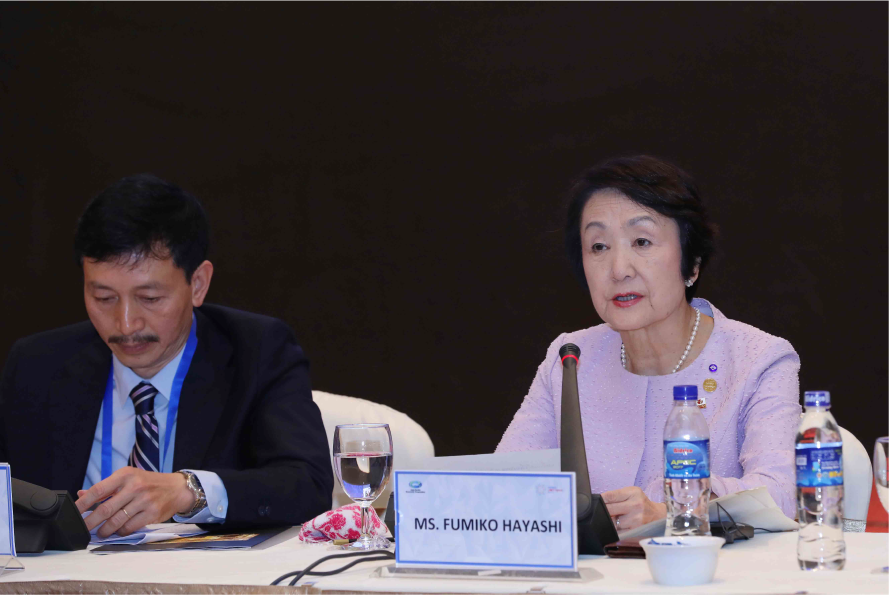
Fumiko Hayashi, Mayor of Yokohama, Japan, spoke at the APEC 2017 Senior Policy Dialogue on Women and Economy in Hue on 29/9/2017. (Photo: Phuong Hoa-VNA)
In 2002, AGGI was strengthened with a new name of “APEC Gender Focal Point Network” (GFPN) to promote women’s integration progress and to maintain previous achievements. The National Committee for the Advancement of Women in Việt Nam successfully organised a GFPN conference in Hội An City in 2006 when the country hosted the APEC.
In 2008, at APEC meetings in Peru, the Women Leadership Network (WLN) evaluated the opportunities and challenges of women taking on major roles in the economy, and were determined on enhancing women’s participation in the making of commerce and export policies. To ensure the representation of women’s rights in discussions of major issues, WLN recommended taking part in meetings of the APEC Working Groups and that women from the APEC member economies would be appointed positions in the APEC Business Advisory Council (ABAC) from 2008.
Within the year, recognising the potential of technology to create more opportunities for women, WLN asked the two APEC Human Resource Development (HRD) and Telecommunications and Information (TEL) Working Groups to develop an action plan to promote the education of women and girls in science, technology, information communication and technology (ICT), and business skills in school.
APEC continues to promote policies that bring advanced technologies and services to small and medium enterprises run by women. The Asian Pacific Women’s Information Network Centre (APWINC) has provided training in e-Biz for 340 women managing directors, policy makers and businesswomen in Indonesia, Korea, the Philippines, Singapore and Việt Nam, aiming to improve their knowledge, skills and capability in practising electronic business, and to create more business opportunities through the direct (offline) meetings of the network.
In 2011, in the context of providing women with new economic opportunities, APEC further developed the Gender Focal Point Network (GFPN) by connecting it to the Women Leadership Network, forming a higher mechanism at the public-private partnership level – which is called the Policy Partnership on Women and the Economy (PPWE) – to enhance the significance of women-related issues within APEC.
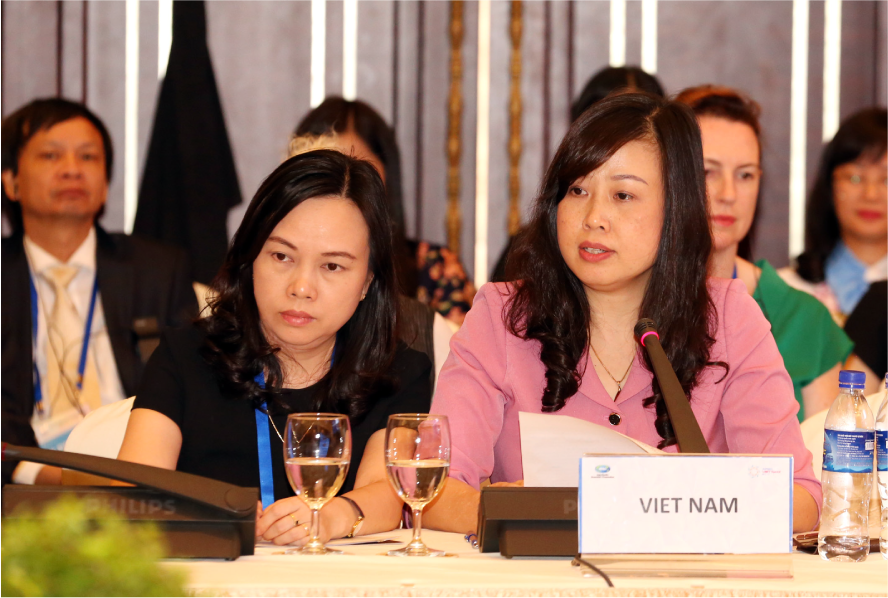
Đại biểu đại diện Việt Nam tham dự chương trình đối thoại. Ảnh: Anh Tuấn – TTXVN
The APEC Woman and the Economy Summit held in the United States in September 2011 and the adoption of the San Francisco Declaration were significant milestones in convening the public and private sector to discuss the significance of women’s economic potential, identifying key barriers which limit women’s economic participation, access to capital and access to market, as well as skills and capacity building and women’s leadership, and calling on the APEC member economies to take concrete actions to reduce these barriers.
In 2012, the World Economic Forum (WEF) held in Russia elevated the significance of women’s contribution to the creative economy, business opportunities and human resources.
In 2013, the APEC WEF was held in Indonesia. Aiming to reach significant achievements in promoting women’s participation in the economy, it emphasised the need for investment in structural reform, human capital, infrastructure, information technology and communication, and in the development of women-led small and medium enterprises.
In 2014, the APEC Women and the Economy Forum held in Beijing, China, identified three key areas for harnessing women's power for Asia-Pacific prosperity: women and green development, women and regional trade cooperation, policy support and women's economic empowerment, and put forward proposals for action.
Within the same year, in HCM City, Việt Nam organised a training course for businesswomen in the field of service exports from 10 APEC member economies. The course aimed to equip businesswomen with knowledge, skills and techniques to improve their businesses’ competitiveness and give them access to the global market, and foster experience sharing of women in terms of exporting their services to international markets. The majority of participants were women owners of small and medium enterprises, and members of small and medium enterprises and women’s associations.
Within the framework of the APEC Year 2017, as a host country, Việt Nam successfully organised the APEC Women and the Economy Forum on September 26 and 27 in Huế City.
Speaking at the forum, Đặng Thị Ngọc Thịnh, Vietnamese Vice President, said she highly appreciated the contribution of the mechanism of cooperation on Women and the Economy of APEC in recent years towards the achievement of APEC in sustaining the role of the Asia-Pacific region. It is the driving force of global economic growth and linkage, promoting prosperity and a sustainable growth that is creative and encompassing the whole region, she said.
Đào Hồng Lan, Deputy Minister of Labour, Invalids, and Social Affairs, said that the forum is an opportunity for Việt Nam and the APEC member economies to continue their contribution to the common achievement and efforts in narrowing gender gaps and empowering women in economic integration.
With the theme “Enhancing Women’s Economic Inclusion and Empowerment in the Changing World” and three priorities: promoting gender equality for sustainable, innovative and inclusive economic growth, enhancing the competitiveness and innovation of women-owned MSMEs and narrowing gender gaps in human resource development, the forum had contributed several proposals and initiatives for the Việt Nam APEC Year 2017.

Vietnam delegates participated in the dialogue program. (Photo: Anh Tuan – VNA)
One of the highlights of the forum is the “APEC Gender Inclusion Guidelines (GIG)” initiative, proposed by Việt Nam, which offers an approach to gender inclusion that takes equality and responsibility to be the centre of all APEC policies, programmes, projects, progresses and action plans.
The initiative inherits the principles of the 1999 Framework for the Integration of Women in APEC. Developing the GIG is a practical contribution of Việt Nam to the APEC Year 2017, which receives support and appreciation from members of the Policy Partnership on Women and the Economy (PPWE).
The APEC ministers and heads of delegations affirmed the importance of GIG as a tool for the implementation of programmes and policies on gender equality within APEC. They also committed to collaborating with other APEC forums and helping policy makers and practitioners promote gender mainstreaming at all levels.
The Vietnamese delegation also proposed to hold meetings and organise activities to support the implementation of the GIG. The Philippines and APEC Secretariat agreed to help Việt Nam identify gender-related contents that need to be included in APEC’s Strategic Plan.
At APEC meetings in Huế City, the “Eligibility Criteria and Guidelines for Accessing the Women and the Economy Sub-Fund” was also approved by WEF. The sub-fund is scheduled to become operational in 2018, promising to bring more opportunities and resources for economies that implement women’s empowerment projects.
Lakshmi Puri, deputy executive director of UN Women (the United Nations Entity for Gender Equality and the Empowerment of Women), said that the APEC member economies should do more to empower women and girls and boost the APEC economy. Empowered women will have the same opportunities to work as men do, and will work even more effectively than men, she said. “Women’s economic empowerment is the right and smart investment, and also an indispensable one,” she added. “Women are an essential, talent pool who can bring something special with value added to economies.” The goals of the 2030 Agenda for Sustainable Development also recognise that women’s full and equal participation in the economy is a vital step toward achieving sustainable development, she said.
The 1946 Constitution of Việt Nam states “women are equal to men in all respects."
Nowadays, gender equality and women’s rights have been concretised in the country’s legal documents, such as the Law on Election of Deputies to the National Assembly, Law on Election of Deputies to People's Councils, Law on Gender Equality and Law on Marriage and Family.
Việt Nam is one of the first countries to sign and adopt the UN Convention on the Elimination of All Forms of Discrimination Against Women (CEDAW), conventions of the International Labour Organisation (ILO) and the Beijing Platform for Action on women.
The country also promulgated the National Strategy on Gender Equality 2011-20, aimed at raising awareness on gender equality, narrowing the gender gap, empowering women, actively implementing international and regional initiatives to promote the protection of women’s rights and combating discrimination against women.
The Vietnamese Government has applied legal measures and enhanced international collaboration to overcome challenges related to gender equality, making efforts in eradicating domestic violence and bridging employment, income and social status gaps between men and women.
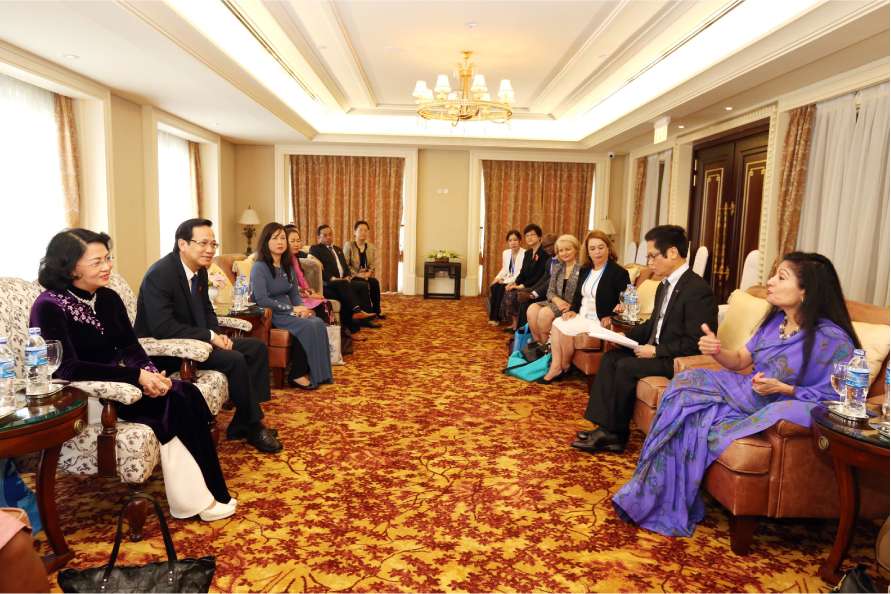
Ngày 28/9/2017, trong chương trình Hội nghị Đối tác chính sách Phụ nữ và Kinh tế APEC lần 2 (PPWE2) tại Huế, Phó chủ tịch nước Đặng Ngọc Thịnh tiếp các trưởng đoàn tham dự Hội nghị. . Ảnh: Anh Tuấn – TTXVN
The proportion of women in the National Assembly XIII (2011-16) has reached 24.4 per cent, making Việt Nam one of the countries with the highest number of female National Assembly deputies in the region and the world. The country was ranked second in the Association of Southeast Asian Nations (ASEAN) and 43rd out of 143 countries worldwide.
Vietnamese women hold many key positions in the country, such as vice president, chairwoman and vice chairwoman of the National Assembly, and are also ministers. Fourteen out of 30 ministries and agencies under the Government have female deputy ministers.
Women also hold key positions at all administration levels and sectors in localities. Forty-nine per cent of the country's female labourers are currently employed. By the end of 2011, 92 per cent of the country’s women were literate and some 80 per cent of girls in remote areas and members of ethnic minorities attended school at the appropriate age.
According to a report by the World Economic Forum in 2016, Việt Nam ranked 65th out of 144 countries on the gender gap index (up 18 notches from 2015), and the rate of women/male participation in labour force was 0.92, almost reaching an equilibrium.
By the end of 2016, statistics from the national database on business registration revealed there were more than 200,000 businesses registered by women entrepreneurs – accounting for 28.5 per cent of the total businesses in the country – with registered capital of VNĐ2,236 trillion (US$98.5 billion), accounting for 18 per cent of the total registered capital of businesses in the economy.
Upon releasing its list of 50 most influential women in Việt Nam, Forbes magazine commented: “Thanks to the outstanding progress in gender equality in recent years, many women have had opportunities to harness their full potential in every field, and are blowing a strong wind of positive energy into all aspects of life in the country. What these influential women have in common is the strength and endurance that have helped them rise up and succeed in their fields.”
Vũ Thị Thuận, chairwoman of the board of management of pharmaceutical company Traphaco JSC, one of Forbes’ 50 celebrated women, said: “It’s not by chance that an owner of a foreign bank says he prefers lending money to women rather than men. It is because women never evade debts, and plan their work down to the minute to save time and increase efficiency.”
“They take care of everyone and are the glue that holds everyone together. They create corporate cultures that are sensible, delicate and skillful. And they seem to become even more potent when facing changes in the market,” she added.
“Have faith in women, empower them,” she said.
On their part, women must believe in themselves and keep striving forward, Thuận added. No one would give them an opportunity if they don’t seize it themselves, she said.
“Society should empower women and women should feel empowered – be confident and meet opportunities head on,” she said. “That’s the only way gender equality is not ‘a cliché’, but gravitates towards practical actions.”