Food security has been a major concern not only in a country but around the world for a long time. To ensure food security, each country needs to not only maintain a sufficient amount of food for the whole society but also ensure that those who produce the food are not getting poorer and lagging. Ensuring food security requires efforts from each country and collaboration between the countries to solve the related issues.
With 21 member economies whose population accounts for 39 per cent of the world’s population, 57 per cent of its GDP and 49 per cent of the global trade, APEC is consolidating its position as the biggest regional economic cooperation in the world, which is creating big impact on all fields of its member economies, including food security and sustainable agriculture.
The 21 APEC member economies lead in agricultural production and food exports in the world. Statistics from the Food and Agricultural Organization (FAO) this year show that the APEC member economies produce about 1,345 billion tonnes of grain, accounting for 60 per cent of the global grain production, of which its rice yield is 409.5 million tonnes, accounting for 82 per cent of the world’s rice yield. Some APEC member economies, such as the US, Thailand, and Việt Nam, are leading exporters of rice. However, differences in production levels, human resources, technologies and markets are creating barriers to the formation of regional production links.
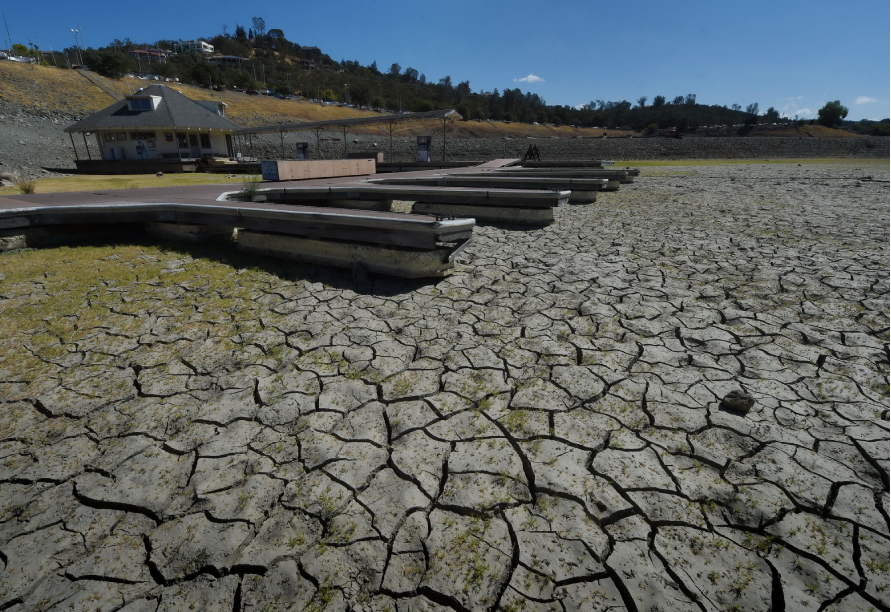
Increasingly harsh weather, rising sea levels, floods and droughts are causing more and more serious impact on world food security. Folsom Lake in Sacramento, US, seens dried up and cracked due to drought on September 17. (Source: AFP/VNA)
Asia-Pacific is the most vulnerable region to natural disasters in the world. The impacts of climate change are happening faster than expected, making the tasks of ensuring food security and developing sustainable agriculture that is adaptable to climate change all the more urgent.
In Việt Nam, since 1988, thanks to the reform policies in agricultural production, the country has not only produced enough food for its 92 million citizens but also for export.
On the other hand, with mountains and highlands accounting for three-fourth of its total area, the country is one of the five countries most affected by climate change, which prevents it from developing sustainable agriculture and ensuring food security.
The Mekong Delta, where the APEC Food Security Week took place in August, is the region that showed the strongest need for sustainable agriculture and food security in the time of climate change.
Although contributing to 90 per cent of the country’s rice exports, the region has been battling with the impacts of climate change, including the longest and most serious drought situation and salt intrusion in the last decade, which are affecting the lives of 20 million local residents and millions of customers around the world.
Thus ensuring food security and promoting sustainable agriculture to adapt to climate change has become one of the four priorities of discussion during the APEC Year 2017 in Việt Nam.
Food security has been a highlighted issue of the APEC since 2010. The first APEC Ministerial Meeting on Food Security, taking place in Niigata, Japan, in October 2010, adopted the 'Niigata Declaration on APEC Food Security' and 'APEC Food Security Action Plan'.
The Niigata Declaration on APEC Food Security set out two goals: Developing sustainable agriculture and facilitating investment, trade and other market functions. It emphasises the collaboration of the APEC member economies in facilitating agricultural production trade, securing market credibility, preparing a favourable business environment and ensuring food safety, as well as facilitating responsible investments in the agricultural sector, promoting technology transfer and protecting copyright. Meanwhile, the APEC Food Security Action Plan proposed specific tactics to realise the Niigata Declaration’s goals, including strengthening the food supply capacities of the APEC member economies through “soft cooperation” activities, collaborating with economies outside of the APEC, ensuring timely food supply in emergency situations, as well as establishing a common database on agriculture and food.
This is considered the first comprehensive plan of the APEC to strive towards food security in the region.
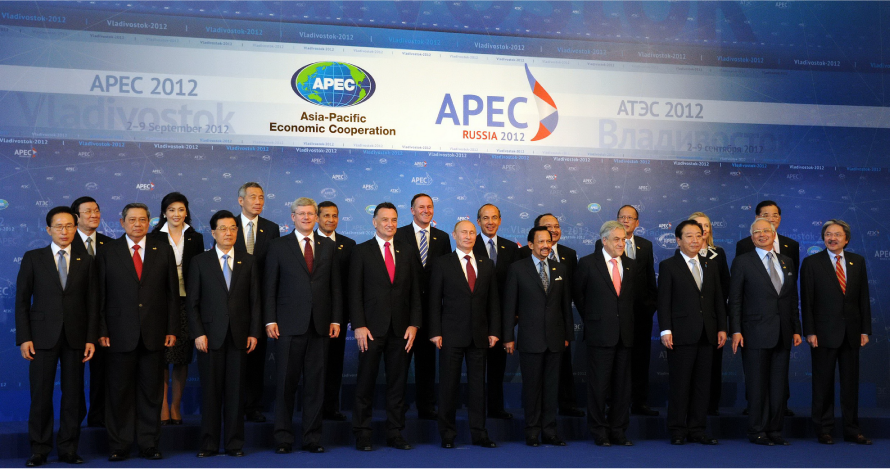
The Asia-Pacific Economic Cooperation (APEC) Ministerial Meeting on Food Security first held in October 2010 in Japan. (Source: THX / VNA)
After the success of the First APEC Ministerial Meeting on Food Security (AMMFS) in Niigata, meetings between the APEC ministers have been held biannually. New action plans on food security were adopted at every meeting.
In 2011, APEC established the Policy Partnership on Food Security (PPFS) to strengthen cooperation between the APEC Business Advisory Council (ABAC), the private sector and the parties concerned with regional food security in a more practical manner.
In addition to these, a number of APEC committees and working groups meet regularly to discuss food security issues, including the Committee on Trade and Investment (CTI), the sub- committees of the Food Safety Cooperation Forum (FSCF), the Agricultural Technical Cooperation Working Group (ATCWG), the Oceans and Fisheries Working Group (OFWG), and the High Level Policy Dialogue on Agricultural Biotechnology (HPLDAB).
In 2012, for the first time, food security became the main topic of the 20th APEC Summit, held in September 2012 in Vladivostok, Russia. Under the theme 'Integrate to Grow, Innovate to Prosper', the Asia-Pacific countries concluded the two-day summit by expressing concern over the global economy, food security, the growing signs of protectionism, “green” growth, and the Doha Round of Trade Negotiations.
At the summit, despite the impacts of drought on their crops, the US and Russia — the world’s leading suppliers of wheat — committed to not limit food exports and emphasised the importance of open market to ensure reliable food supplies.
At the APEC Summit 2014 in China, the APEC’s senior officials adopted the APEC Food Security Roadmap Towards 2020, after which they set out the long-term goal of establishing sufficient regional food systems to ensure sustainable food security for the member economies, improving productivity and providing food at affordable prices for the low-income people.
In recent years, the APEC member economies have proposed and successfully implemented several food security initiatives. With the latest ones proposed by Việt Nam within the APEC Year 2017, it is expected that the APEC will take a leap forward in tackling the issue.
Việt Nam has set high hopes on the APEC forum on agricultural issues, especially the APEC Agricultural Week held in the southern Cần Thơ City by the end of August.
“Food security is a global issue which should not be treated lightly, especially in the context of climate change in the Asia-Pacific region” was Việt Nam’s message at the event. All countries in the region must try their best to come up with a group of coordinated solutions from every sector, not the agricultural sector alone, to thoroughly tackle the food security issue for the region.
The country’s second message at the event dealt with the application of advanced technologies and policies to attract investments from society to support the State to solve food security difficulties.
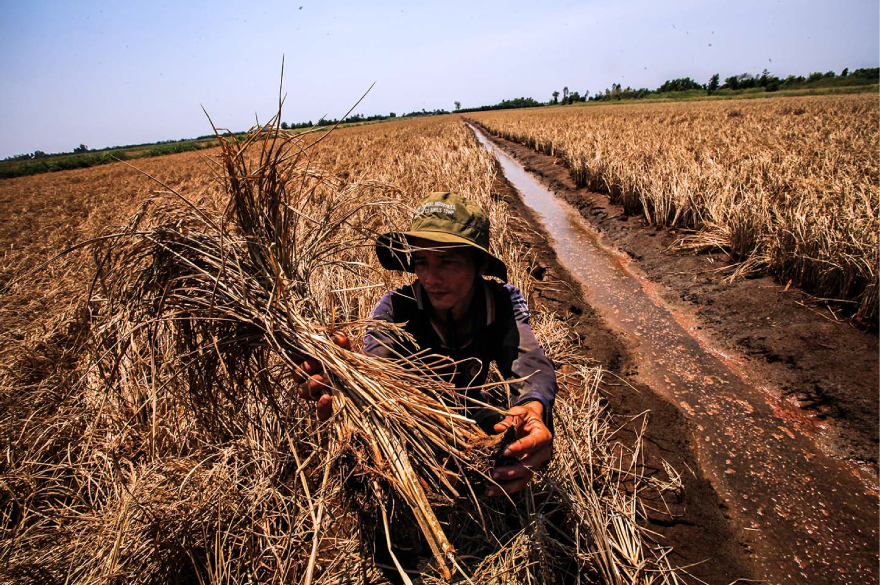
From a land considered fertile, rice fields in Kiên Giang province are often die dry due to drought and saline intrusion. Rice crop yields here are about 40 per cent compared to before. (Photo: Trọng Đạt / VNA)
At the opening ceremony of the High-Level Policy Dialogue on Food Security and Sustainable Agriculture in Response to Climate Change, held on August 25 in Cần Thơ City, Deputy Prime Minister Trịnh Đình Dũng stressed that ensuring food security and developing sustainable agriculture in relation to the impacts of climate change are not only a priority or expectation, but a mission and roadmap that the APEC needs to complete and a responsibility that every member economy should take.
On its part, the Vietnamese Government valued the APEC collaborations and has committed to cooperating with the member economies and partners to ensure food security and attain peace, stability, development and common prosperity in the region, he said.
During the APEC Agricultural Week in Cần Thơ City, representatives of the 21 member economies shared the methods of using information on weather for agricultural production and discussing approaches, as well as resources, for rural development, rural-urban linkages and rural economic issues.
The discussions also focused on developing food value chains to provide safe food and ensure food security for the APEC economies and the region, as well as offering solutions to increase the value of output and equitable distribution of benefits for all stakeholders in the value chains. The development of sustainable food chains will probably open a new escape route from poverty for millions of poor households for the developing APEC economies.
Representatives from the APEC member economies also expressed concerns and shared experiences on smart agricultural practices in relation to climate change and the policies related to food security and sustainable growth.
Three important documents were approved by the end of the APEC Agricultural Week 2017 in Việt Nam, including the Food Security and Climate Change Multi-Year Action Plan 2018-20 (MYAP), the Action Plan of the Strategic Framework on Rural-Urban Development to Strengthen Food Security and Quality Growth (AP), and the Cần Thơ Statement on Enhancing Food Security and Sustainable Agriculture in Response to Climate Change.
The MYAP is intended to implement the Multi-Year APEC Programme on Food Security and Climate Change, fulfilling the APEC Food Security Roadmap towards 2020 and Bogor Goals 2020. It also aims to strengthen regional collaborations to solve food security issues, develop agricultural economies, adapt to climate change and save food.
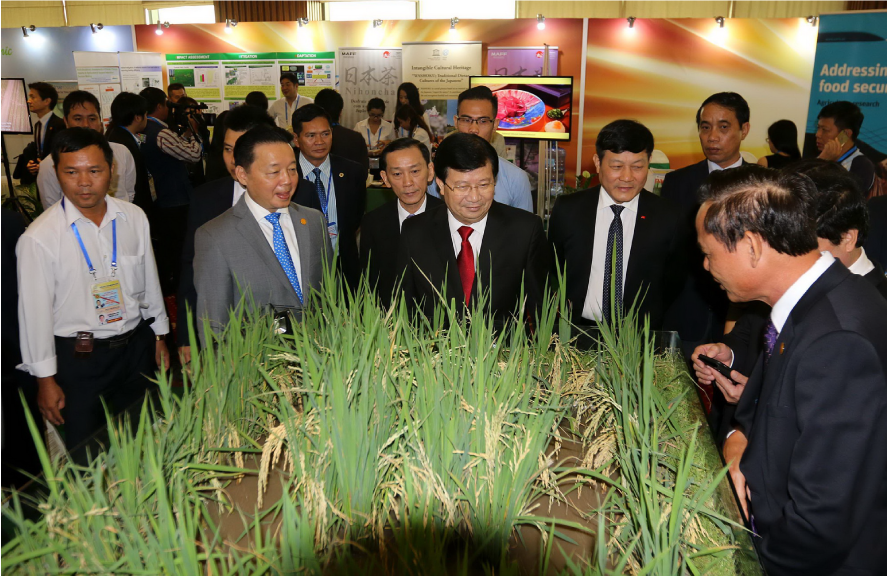
APEC Exhibition on New Food Products and Technologies in Agriculture within the framework of the Food Security Week and Advanced Policy Dialogue on Food Security and Sustainable Agriculture Adaptation to Climate Change on August 25th in Cần Thơ City. (Photo: Thanh Vũ / VNA)
The Action Plan of the Strategic Framework on Rural-Urban Development to Strengthen Food Security and Quality Growth will address the challenges associated with the rural-urban development and food security by pursuing four concurrent areas, including inclusive economic development, sustainable natural resource management, social aspects and administrative efficiency. All actions should be voluntary and non-bidding, proposed by each economy on the basis of domestic priorities and budget availability. Each economy should commit to provide regular updates on their progress if it decides to get involved in the plan.
The Cần Thơ Statement on Enhancing Food Security and Sustainable Agriculture in Response to Climate Change stresses that “food security is and will remain a critical issue for the international community in general and the APEC region in particular,” and highlights the significant role played by the APEC economies in today’s agricultural value chain and the importance of trade in achieving food security.
It also recognises the linkages between food security, poverty, climate change and sustainable development. It states that economic development, environmental protection, adaptation to climate change and sustainable agricultural development will contribute to advancing a number of the United Nations Sustainable Development Goals for the 2015-2030 period.
The statement calls for strengthening regional cooperation under five APEC priorities in the agricultural sector, namely, addressing food security and climate change through the APEC Food and Security and Climate Change Multi-Year Action Plan; sustainable natural resource management with a focus on strengthening policies on climate change adaptation, effective resource use, sustainable growth, encouraging investment in watershed and ecosystem protection projects, sustainable management and protection of marine ecosystems; sustainable rural-urban development through the APEC Strategic Framework for Action on Sustainable Urban-Rural Development; and facilitating trade and investment in agriculture and food markets in the region.
Through the statement, the APEC member economies also agreed to strengthen the realisation of the Free Trade Area of the Asia-Pacific (FTAAP) to enhance the role of the private sector investment, increase the application of science-based international standards on investment and trade, and increase the application of biotechnology to improve yields and income for farmers.
The APEC member economies agreed to continue implementing the APEC multi-year project on food loss and food waste control, calling for public-private partnerships (PPP) investments (a cooperative arrangement between public and private sectors) in public awareness programmes and investing more in agricultural production processing. One of the goals of the APEC Food Security Roadmap towards 2020 is to reduce food waste and food loss by 10 per cent compared to the 2011-2012 period.