The relentless march of the Industry 4.0 has brought about opportunities for unprecedented breakthroughs in productivity and for the development of human resources in hi-tech sectors.
However, this phenomenon also places millions of labourers at the risk of unemployment, even as they have yet to reach the retirement age.
In the 2nd Senior Officials’ Meeting (SOM2) held earlier this year within the APEC 2017, experts have come to a consensus that the APEC member economies, including Việt Nam, are going to face excess of workers in a number of sectors. Under these potential scenarios, closer connectivity to facilitate the flow of labour exchange is the solution the APEC member economies are heading towards.

The 21st century has witnessed drastic leaps in the development of information technology; the boom of the internet, automation and digitalisation; and the emergence of knowledge economy and artificial intelligence. The global economy picture will certainly see considerable changes in the following decades thanks to Industry 4.0.
Experts have forecast that Industry 4.0 will bring great benefits to the economy by lifting productivity and product quality, and improving competitiveness, among others. However, along with these positive advantages, the fourth industrial revolution will also pose really difficult challenges to the job market, as millions of jobs are going to disappear, especially in industries that are traditionally labour-intensive and employ a large number of workers.
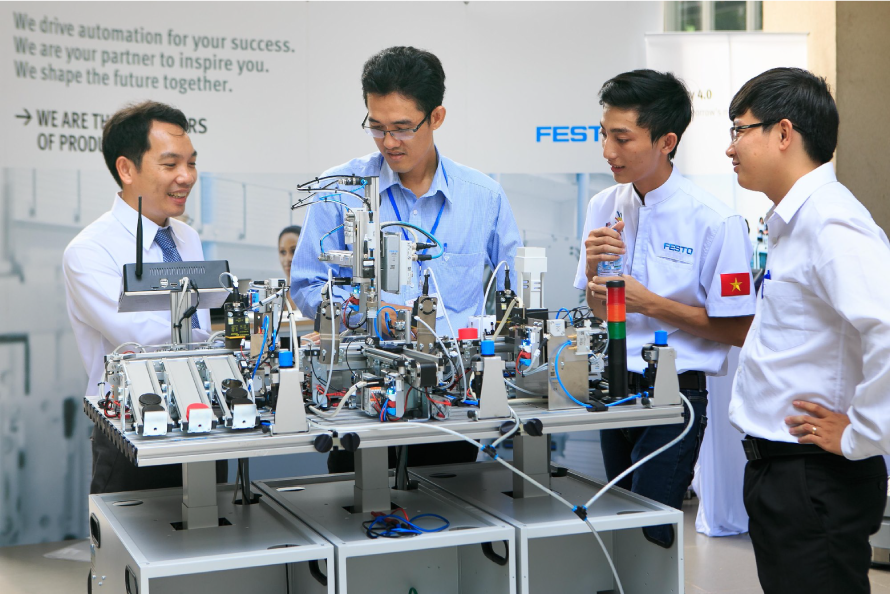
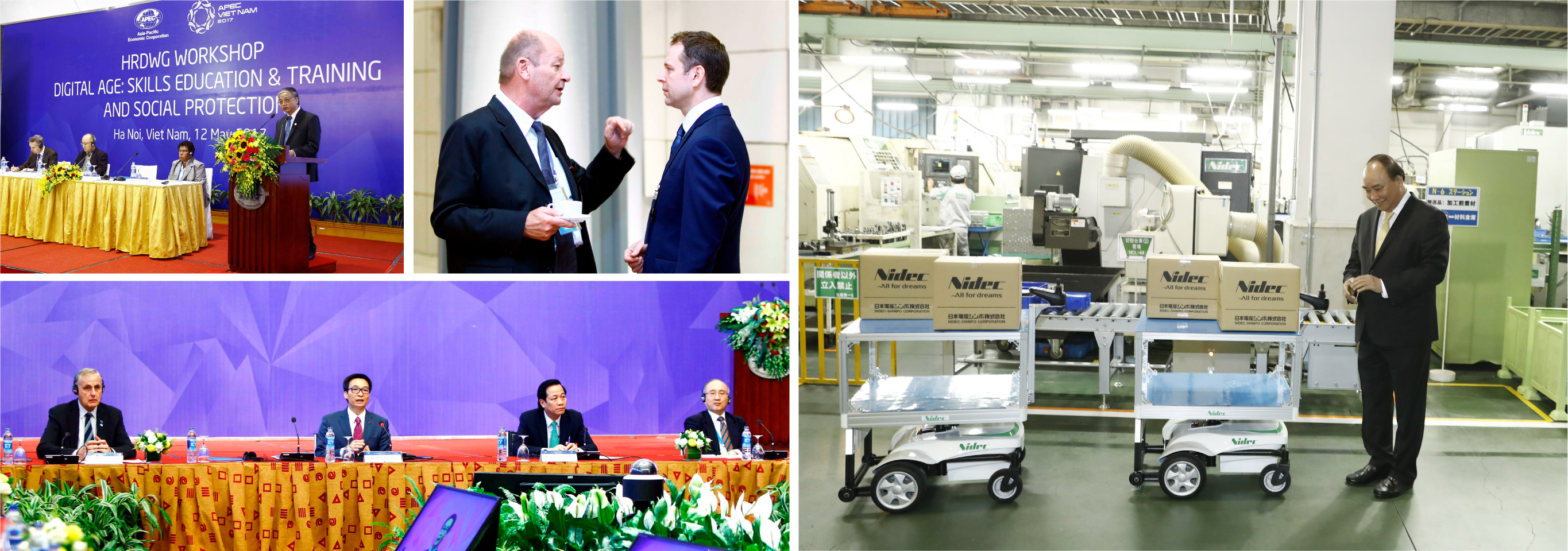
An automation model. — VNA Photo Văn Việt
Phú Huỳnh, a labour expert from International Labour Organisation (ILO) underscored that Industry 4.0 was creating huge impacts, at unseen speeds, on the job markets and the APEC member economies were not the exceptions.
“More popular use of technology in production, such as automation, robots, artificial intelligence, Internet of Things and 3D printing, brings profound changes to the job market. In this process, Việt Nam happens to be one of the countries whose labour force is hit hardest by automation, just behind China, in fact,” Huỳnh said.
Some forecasts have estimated that due to increasing automation and digitalisation in the car manufacturing industry, 60 per cent of paid workers in Indonesia and 73 per cent in Thailand are staring at unemployment.
High-income APEC economies, such as the United States, are also not exempt from concerns about automation replacing workers and the widening gaps between “interesting jobs” and low-quality jobs.
In Việt Nam, according to the latest reports by ILO, an estimated 86 per cent of the labourers in the textile and garment, and footwear industries, and 75 per cent in the electronics industry will face employment uncertainties, also due to the latest breakthroughs in science and technology. More worryingly, these industries are currently the biggest employers in Việt Nam. Women and low-skilled/unskilled workers are especially vulnerable to the negative impacts of automation.

One of APEC 2017’s activities, the APEC High-level Policy Dialogue on Human Resources Development in the Digital Age held in May is particularly relevant as the world is preparing for massive changes in production because of scientific and technological advancements. The demands for new types of jobs and new skills are growing and altering the existing labour relations.
At this event, delegates from the APEC member economies have discussed and eventually adopted the framework on human resources development in the digital age, which included a group of policies and solutions aimed at assisting member economies to prepare workers for new challenges, as well as the new opportunities, presented by the new era.
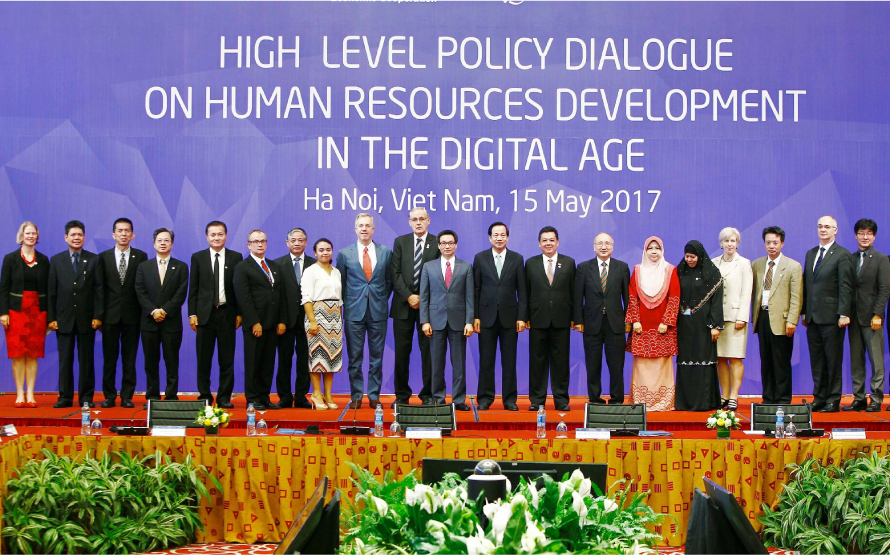
Việt Nam’s Deputy Prime Minister Vũ Đức Đam with delegates from APEC member economies at the APEC High-level Policy Dialogue on Human Resources Development in the Digital Age held in May 2017. — VNA Photo An Đăng
To grasp opportunities and address the challenges in the digital age, it is important that APEC be used as a regional forum for policy discussion and cooperation in human resources development.
The objectives of the adopted framework are to provide high-level policy orientations to strengthen regional collaboration in human resources development in the digital age, identify common challenges in the context of technological changes, as well as recognise and implement activities in priority cooperation areas, where APEC can contribute to supplementary values, such as the future of work in the digital age and labour market policies, education and vocational training, and social security.
Representatives from the 21 APEC economies proposed the framework be realised between 2017 and 2025; the ministers in charge of human resources development will assess the implementation process in 2022.
Within the APEC 2017’s theme 'Creating new dynamism, Fostering a shared future', the framework on human resources development was an initiative that aimed to boost cooperation in the development of human resources among the member economies in the region to cope with challenges brought about by the digital age, with a focus on actions in three priority fields — developing a job market system; raising labour skills and developing education and training; and improving social security.
The APEC framework on human resources also contribute to previous initiatives such as the APEC education strategy, which focuses on education reforms and contributes to the global efforts on this issue, including the ILO’s Future of Work centenary initiative, as well as United Nations’ sustainable development goals, especially the fourth goal, “ensuring inclusive and quality education for all and promote lifelong learning,” and the eighth goal, “promoting inclusive and sustainable economic growth, employment and decent work for all.”

Facing the new realities of the labour market in the digital era, some like Kim Lê, director of Manpower Group Việt Nam, are quite optimistic.
“The future of work is not necessarily replacing all humans with machines; this should be viewed as a chance for governments to create new jobs. On the bright side, human knowledge combined with fast-growing advancements in science and technology will certainly bring about a much more prosperous world,” she said.
Also according to Kim Lệ, technology helps to create new models of economy that can partly help to deal with the existing problems in the current job market, for example, the advent of ‘gig economy’ where temporary employment of independent freelancers are favoured, as we have seen in new jobs created by popular technology startups such as Uber, Grab, Lyft and Airbnb, among others.
To take advantage of the new opportunities while minimising the negative impacts of digitalisation, Kim Lê said improvements to the human resources — for the right ones, at the right time, by the right measures — are of crucial importance. However, this will require persistent and constant efforts and investment under a methodical and encompassing strategy that will cover areas from education and re-training to knowledge and skills development.
Globalisation and technology revolution are placing mounting challenges on the APEC member economies in general and Việt Nam in particular. As Việt Nam is going past its ‘golden demographics era’, the labour force remains largely unskilled, and the pressure in the new age is certainly massive.
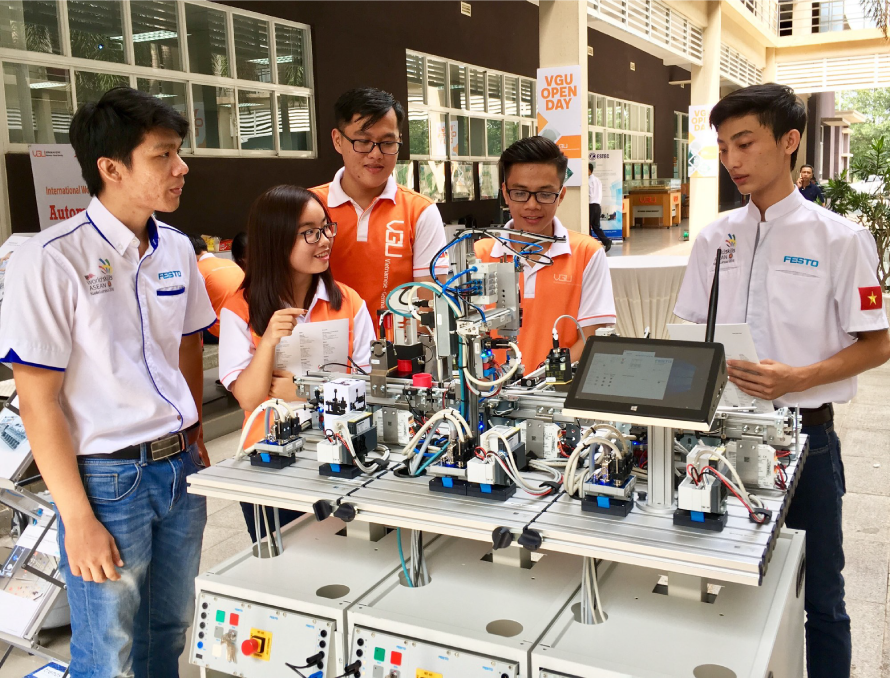
Focus on human resources development to meet the demands of the digital era. — VNA Photo Văn Việt
It is expected that in the following years (2017-2025), the Vietnamese labour force will grow by an annual average of 1.28 per cent, or about 723,000 workers a year, taking the total number of workers from 55.54 million in 2016 to 62 million by 2025. In order to accommodate these workers, the Vietnamese economy will need to create 650,000 new jobs every year.
However, by the end of 2016, only 11.21 million out of the 54.36 workers, or only 20.6 per cent, in the country have undergone training or have received qualifications. Among the skilled/trained ones, the labour structure between sectors remained unbalanced, not to mention a discrepancy between the number of trained workers versus the actual demands of the market.
Another thing that needs to be noted is that the number of trained workers in the hi- tech sectors remained low, as the country was in desperate need of such workers, especially for key industries such as electronics, engineering, electricals, among others, as well as other industries hit hardest by deeper international economic integration.
At the APEC High-level Policy Dialogue held in May, Deputy Prime Minister Vũ Đức Đam said the Vietnamese government had tasked itself with the responsibility to successfully renovate growth models and restructure the economy, and that it is committed to fast but sustainable growth, with the help of technology and science, aiming towards raising productivity and the economy’s growth quality.
Nguyễn Phương Mai, managing director of Navigos Search – a notable recruitment website in Việt Nam, said that there would be sizeable shifts in labour in the region, making it necessary to enforce regulations on encouraging and guiding labour shift in the ASEAN community, as well as put policies in place to help businesses develop their staff training plans.
Phú Huỳnh, a labour expert from ILO, noted that the APEC economies should conduct mutual research, increase knowledge and experience exchange, and together monitor the job markets. At the same time, there should be tight collaboration between policymakers, businesses and training centres to find out the best solutions to fully utilise the opportunities and effectively address the challenges in human resources in the Industry 4.0 era.
Automation and digitalisation in the car manufacturing industry will make 60 per cent of paid workers in Indonesia and 73 per cent in Thailand face risks of unemployment.
In Việt Nam, an estimated 86 per cent of labourers in the textile and garment and footwear industries, and 75 per cent in the electronics industry will encounter employment uncertainties during the fourth industrial revolution
The objectives of the adopted APEC Framework on Human Resource Development in the Digital Age are to provide high-level policy orientations to strengthen regional collaboration in human resources development in the digital age, identify common challenges in the context of technological changes, as well as recognise and implement activities in priority cooperation areas where APEC can contribute supplementary values, such as the future of work in the digital age and labour market policies, education and vocational training, and social security.